The planning situation
A room or asset commitment occurs near a local clock transition.
The constraint to resolve
Ambiguous local times make the intended reservation duration unclear.
Set up this specific workflow
Select the correct IANA timezone, inspect clock warnings and choose unambiguous timing for the reservation.
Work in the spaces & assets workspace. Use your organisation’s actual dates, timezone and opening hours. Presets are editable starting points; they do not supply a country’s calendar or verify organisational policies.
Check the result before publishing
Review the transition-day output with the facility coordinator before communicating the booking.
Resolve unplaced activities and reported conflicts, inspect the relevant people and resource views, and publish the reviewed version deliberately.
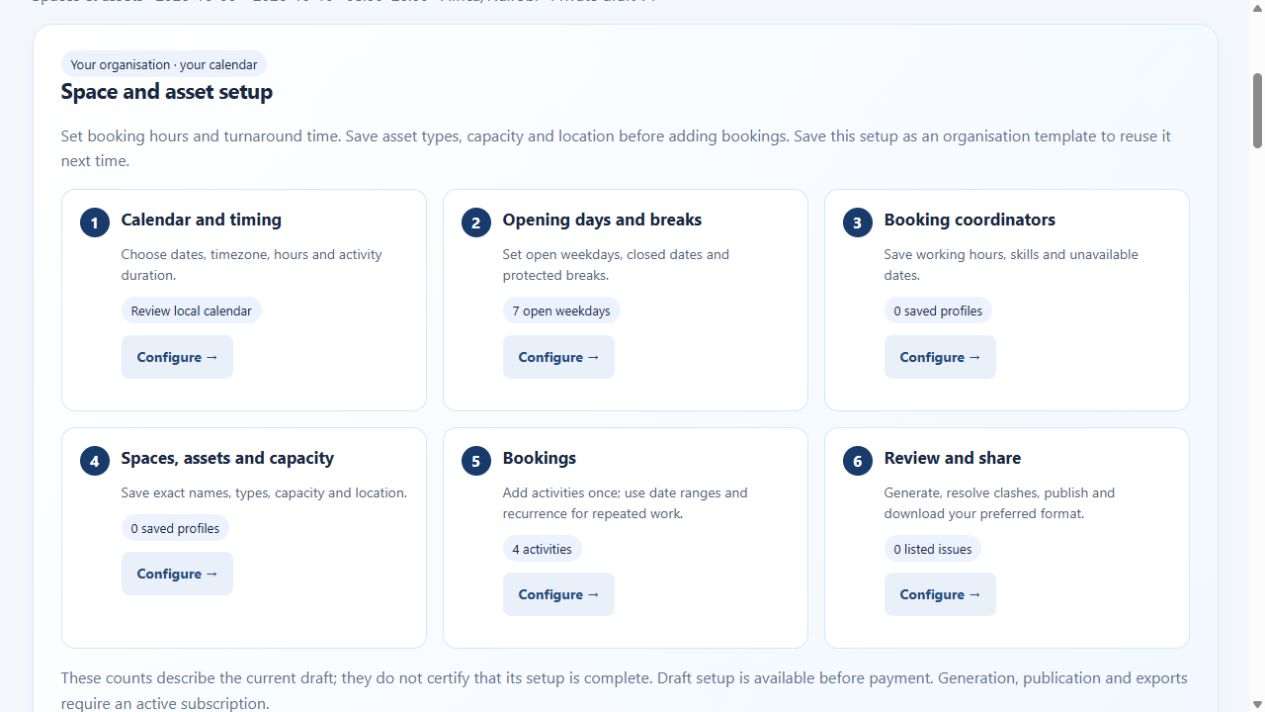
See the spaces & assets application
Demo and paid account access
View the public demo with sample data before buying. A verified email and active paid subscription are required to create workspaces, enter your own scheduling details, generate, publish and export. One subscription covers all five workspaces within your organisation account.
View the sample demo · Create an account · Read account and billing help