A practical approach
Compare products using the same representative data and acceptance checklist. Require a trial of difficult placements and revisions rather than relying on marketing labels.
Check before publishing
A provider's feature list is not proof that your school's full timetable will fit.
From preparation to a published timetable
- Prepare the complete activity list and use consistent names for shared people, rooms and groups.
- Create the plan with the correct dates, timezone, opening hours and daily workload limit.
- Configure availability, breaks and any required qualifications, room types, capacities or travel buffers.
- Generate a draft or compare alternatives, inspect the reported issues and make the required corrections.
- Review the actual teaching coverage. Where independent approval is enabled, request review of the final version before publication.
- Publish the checked snapshot, inspect its output and give staff access to their own timetable using their verified account emails.
Planning focus for this workflow
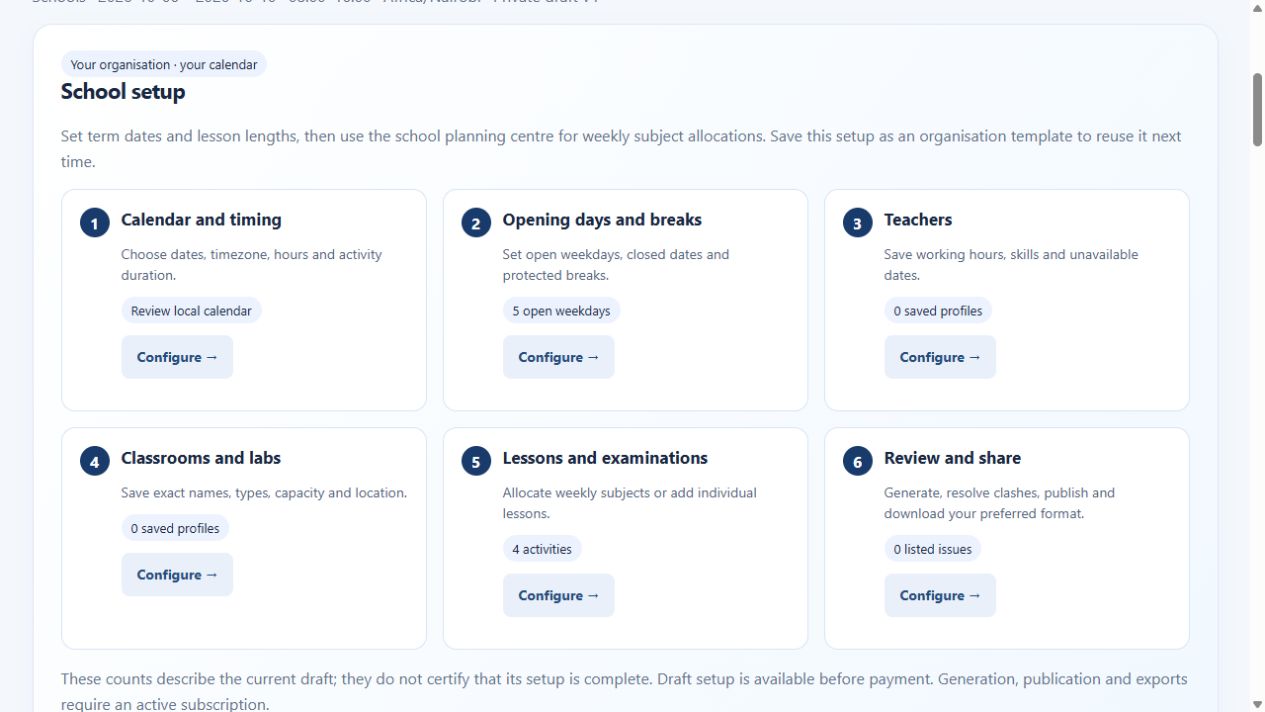
For the scenario covered on this page—Best School Timetable Software: What to Compare in 2026—start with the people, activities, spaces, timing rules and constraints that materially affect the plan. Build a representative draft, review unresolved work, then publish only after the responsible team has checked it.
For school and academic planning, verify lesson demand, teacher availability, class groups, specialist rooms, double periods, breaks and campus travel before generation. Review curriculum coverage and unresolved clashes before releasing a timetable.
VeloRoster can compare three scored alternatives, flag listed clashes, keep a private draft and export reviewed schedules in supported formats. Explore the scheduling use-case library, worldwide guides or live interactive demo.
Explore related guides: Choosing timetable software
Continue with these connected planning topics, or browse the complete scheduling guidebook.